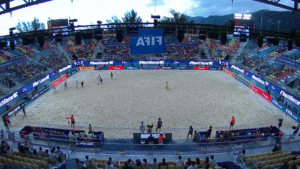
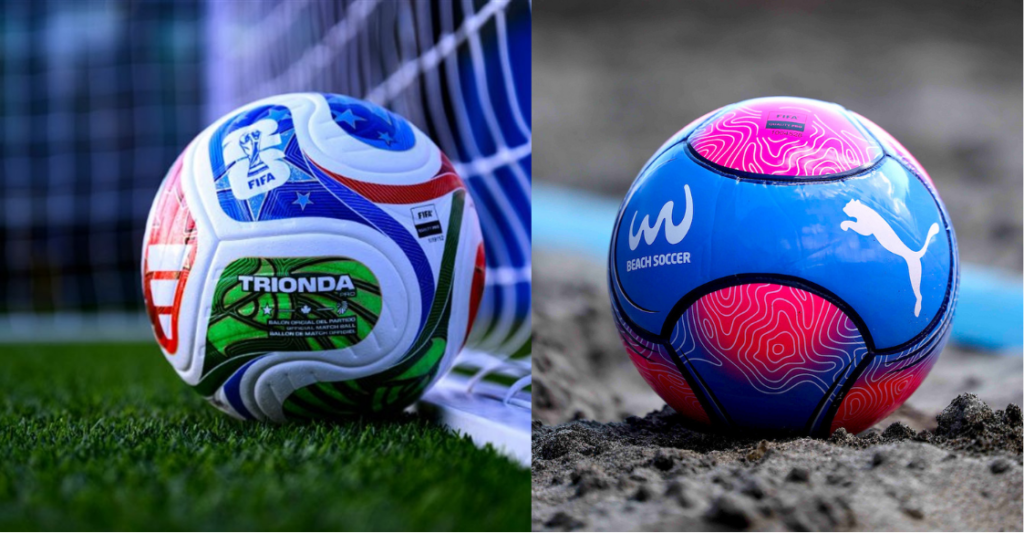
Understanding how 11-a-side football reforms compare to the unique structure of beach soccer
Recent amendments approved by The International Football Association Board (IFAB) have sparked wide discussion across the global football community. With implementation set for competitions including the FIFA World Cup 2026, many stakeholders have asked an important question:
Do these changes apply to beach soccer?
The short answer: No.
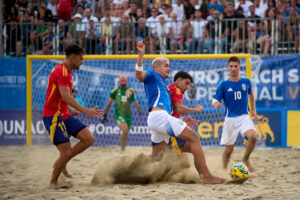
While both formats fall under the umbrella of FIFA, the regulatory frameworks are different. Beach soccer operates under its own dedicated Laws of the Game, developed and implemented with the support of Beach Soccer Worldwide (BSWW).
Here’s a clear breakdown of what differs — and why it matters.
1️⃣ Time-Wasting & Countdown Measures
IFAB (11-a-side Football)
- Five-second visual countdown for delayed throw-ins and goal kicks
- Eight-second rule for goalkeepers holding the ball
- Ten-second limit for substituted players to leave the pitch
Beach Soccer
- Stopped clock system (three 12-minute periods)
- Referees and timekeepers already control restarts strictly
- Substitutions are rolling and unlimited
- No throw-ins (kick-ins instead)
- No traditional goal kicks — restarts follow different procedures
Key difference:
Beach soccer’s stopped-clock format naturally reduces time-wasting incentives, making countdown systems largely unnecessary.
2️⃣ Substitution Procedures
IFAB
- Players must leave within 10 seconds
- Substitute delayed if exiting player wastes time
Beach Soccer
- Unlimited rolling substitutions
- Players enter and exit within a defined substitution zone
- No substitution board delays
Key difference:
Beach soccer is designed for fluid rotation, supporting high intensity and pace.
3️⃣ Injury Treatment Protocol
IFAB
- Injured players must remain off the field for one minute (running clock) after treatment
Beach Soccer
- Injury management already prioritises quick removal and restart
- Stopped clock reduces incentive to exaggerate injuries
- Medical protocols adapted to sand conditions
Key difference:
Beach soccer’s time format and match tempo already discourage simulation-based delays.
4️⃣ VAR & Video Review
IFAB
Expanded VAR powers to review:
- Incorrect second yellow cards
- Mistaken identity
- Incorrectly awarded corner kicks
Beach Soccer
- Video Support may be used in certain competitions
- Protocols are separate from IFAB’s VAR structure
- No automatic extension of IFAB changes
Key difference:
Beach soccer video review systems are competition-specific and independently regulated.
5️⃣ Equipment & Referee Technology
IFAB
- Referee body cameras permitted (competition option)
- Non-dangerous covered items allowed
Beach Soccer
- Equipment regulations tailored to barefoot play
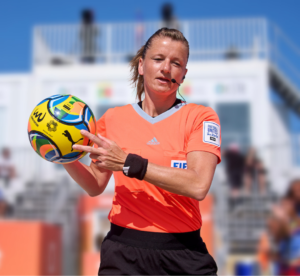
- Referee communication systems adapted to beach environments
- No direct link to IFAB equipment amendments
Key difference:
Beach soccer’s physical and environmental demands require tailored equipment standards.
Why the Distinction Matters
Although both disciplines share football’s core principles, their operational realities differ significantly:
| 11-a-Side Football | Beach Soccer |
|---|---|
| 90 minutes, running clock | 3×12 minutes, stopped clock |
| Limited substitutions | Unlimited rolling substitutions |
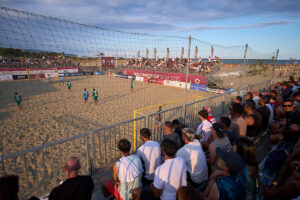
| Grass/turf surface | Sand surface |
| IFAB Laws | FIFA Beach Soccer Laws |
Beach soccer is structurally built for speed, spectacle, and constant engagement. Many of the IFAB reforms are aimed at preserving effective playing time — something beach soccer’s design already protects.
Two Games, One Global Vision
While regulatory pathways differ, both formats share the same overarching goal:
protecting the flow, fairness, and spectacle of the game.
As IFAB modernises 11-a-side football and FIFA continues refining the Beach Soccer Laws, the evolution of both codes reflects a shared commitment to integrity and entertainment — adapted to their distinct playing environments.
Understanding these differences ensures clarity for players, referees, administrators, and fans — and reinforces that beach soccer is not simply a variation of football, but a discipline with its own identity, structure, and governance.